
Our 10-seat, automated shuttle vehicle is set to transform the way people transport around towns and cities. The shuttle, which is already gaining popularity globally, is the world’s first conventional electric and automated vehicle. The product helps to provide transport for city centres, shopping and care facilities, airports and heritage sites.
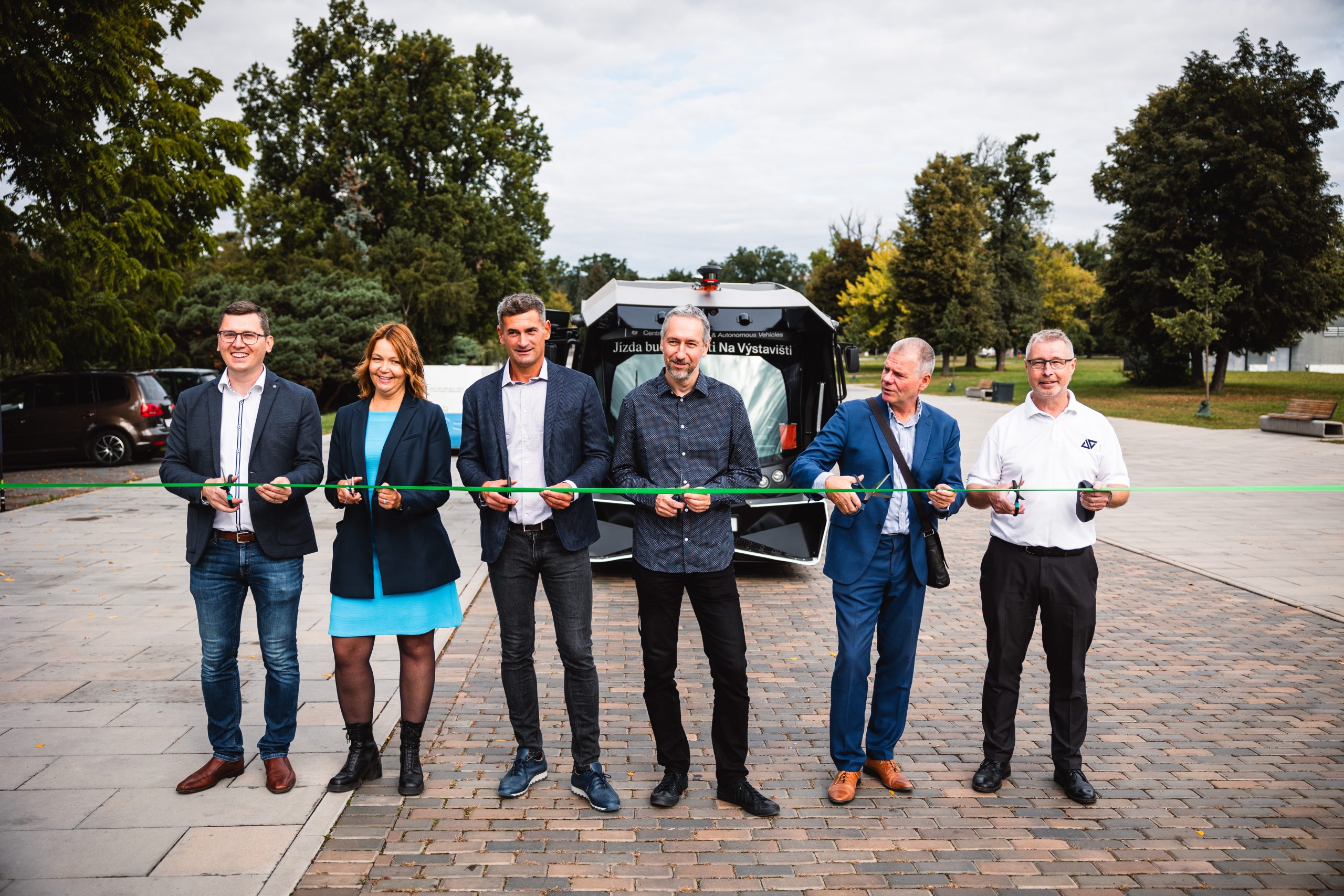
The presentation of these self-driving minibuses is a collaborative effort between the city of Prague, research company PowerHUB, and British transport company Aurrigo, offering an exciting glimpse into the world of autonomous transportation.
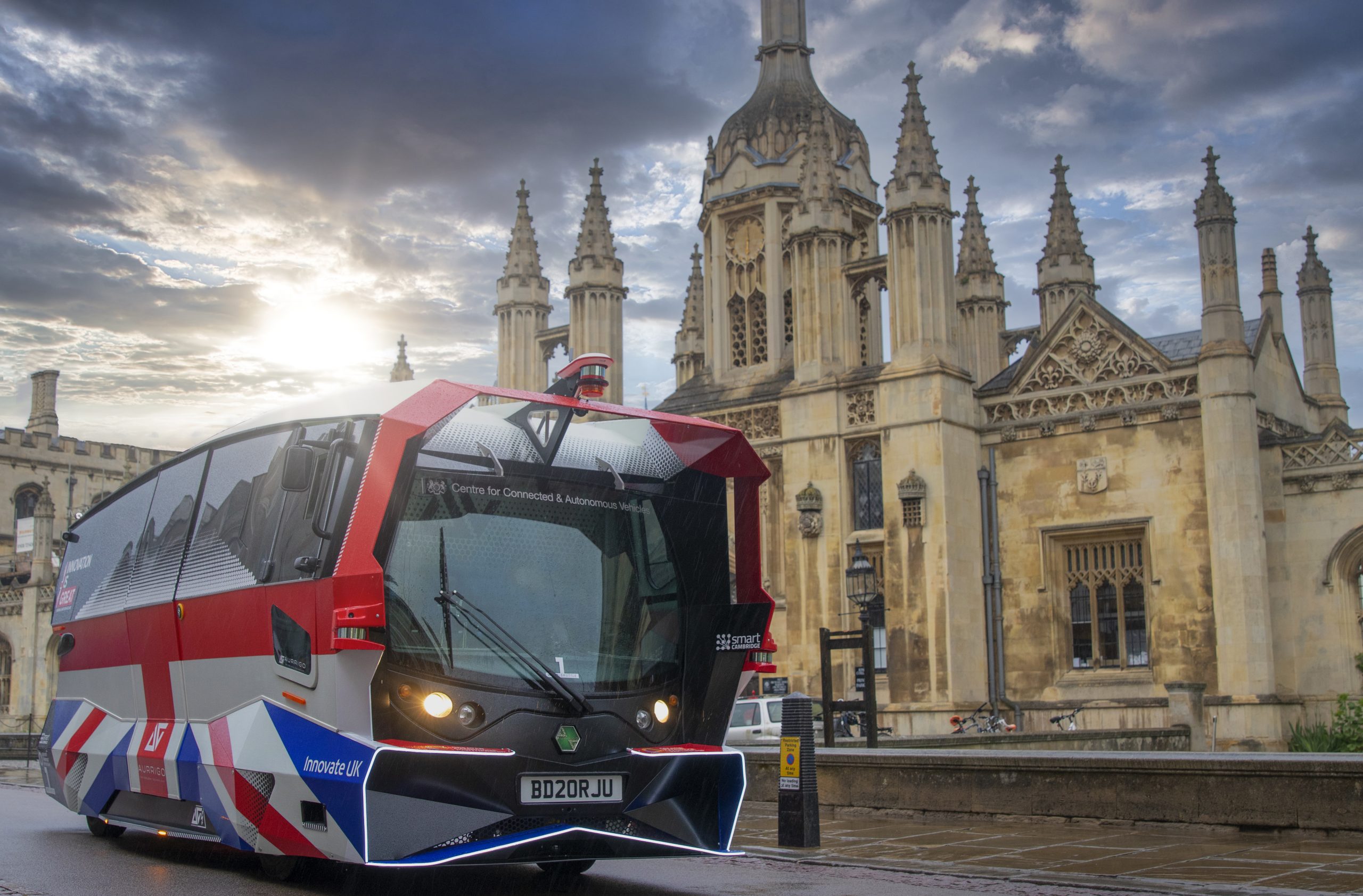
The Auto-Shuttle, which was revealed last year, is able to seat 10 people (when not social distancing) and will drive on roads surrounded by other traffic, including cars, lorries, vans, bikes and pedestrians. Three Auto-Shuttles have were deployed for the trial. They transported passengers from Cambridge’s Madingley Road park and ride site to and around the University of Cambridge’s nearby West Campus, a route of around two miles.
Inside, the Auto-Shuttle has seating space for a maximum of 10 people, as well as space for wheelchair users, who can access the shuttle via an automatically deployed ramp.
Last August, Aurrigo ran the shuttle at an international golf competition at Celtic Manor – the European Tour’s ISPS Honda Wales Open – where it transported players and caddies around the facility.
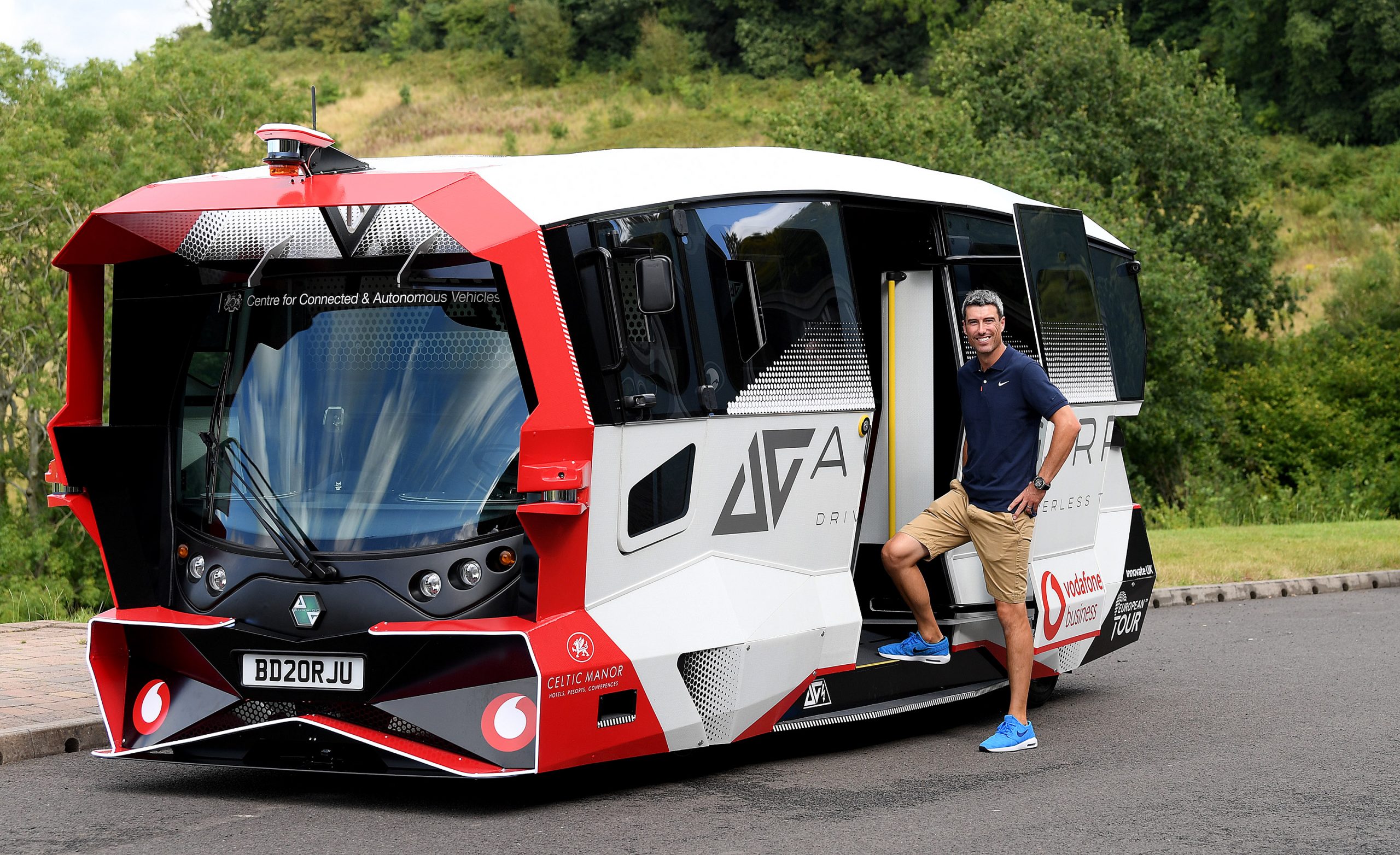
Aurrigo’s Auto-Shuttle ran three golfers and their caddies at a time from the 2010 Ryder Cup Clubhouse to the first tee, ensuring social distancing rules are obeyed.
While it’s large enough to seat 10 people under standard conditions, its interior has been reconfigured with three benches capable of seating two people two metres apart, positioned 1 metre apart from the next nearest bench.
It feeds back data from its journey over Vodafone’s 4G network, allowing Aurrigo’s fleet management system to keep an eye on its progress remotely.
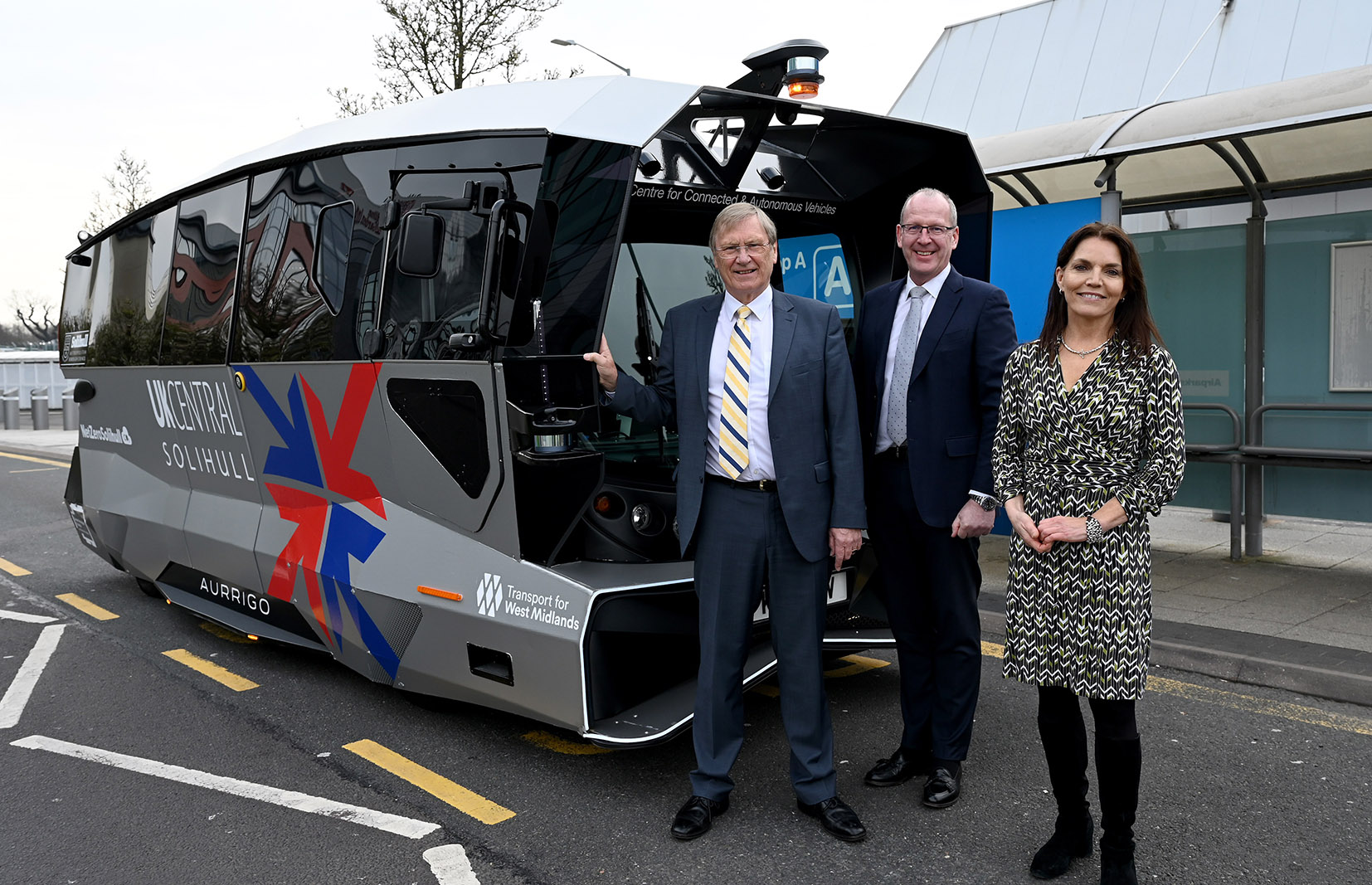
Aurrigo, which employs over 70 people at its Advanced Engineering Centre, will deploy its 10-seater Auto-Shuttle alongside live traffic on the roads of Birmingham Airport. The company has mapped out a route that will initially transport staff from the Departures entrance and Diamond House to Car Park 5, with the potential for the trial to be extended to passengers later this month.
The zero-emissions autonomous shuttle uses a suite of sensors, including LiDAR, to understand its surroundings and move safely around its environment. For the purpose of testing, and in line with current legislation, a safety operator will be onboard at all times, whilst the shuttle can also be manually driven with conventional controls to give the ultimate in operational flexibility. This latest project is an exciting Solihull Council-led initiative to test how Connected Autonomous Vehicles (CAVs) might be integrated into the borough’s transport network in the future and follows a successful trial at the National Exhibition Centre last year.

Aurrigo, which employs over 70 people at its Advanced Engineering Centre, will deploy its 10-seater Auto-Shuttle alongside live traffic on the roads of Birmingham Airport. The company has mapped out a route that will initially transport staff from the Departures entrance and Diamond House to Car Park 5, with the potential for the trial to be extended to passengers later this month.
The zero-emissions autonomous shuttle uses a suite of sensors, including LiDAR, to understand its surroundings and move safely around its environment. For the purpose of testing, and in line with current legislation, a safety operator will be onboard at all times, whilst the shuttle can also be manually driven with conventional controls to give the ultimate in operational flexibility. This latest project is an exciting Solihull Council-led initiative to test how Connected Autonomous Vehicles (CAVs) might be integrated into the borough’s transport network in the future and follows a successful trial at the National Exhibition Centre last year.


UNIT 33 BILTON INDUSTRIAL ESTATE
HUMBER AVENUE, COVENTRY, CV3 1JL. UK
0044 (0)24 7663 5818